La Cacica rural district · Zapatoca · Santander · Colombia
CIDERT connects veredas (rural districts), peasant associations and municipalities in Santander, Colombia, into a technical network that manages partnerships, socio-environmental restoration projects and cooperation funding that no organization could reach on its own. We believe community organization is the engine that transforms a territory and reduces multidimensional poverty. The La Cacica district sparks the network; the network of Zapatoca's districts builds the model.
Who we are
CIDERT (Corporación Integral para el Desarrollo Rural y Territorial) is a non-profit corporation based in Zapatoca, Santander, a mountain municipality of about 10,300 people in northeastern Colombia. We work within the legal framework of Peasant Agri-Food Territories (TECAM). We are the technical and institutional arm of local peasant communities: we handle what communities need but cannot process alone, always with territory and food sovereignty as non-negotiable priorities.
We are not an outside organization that comes to "help" the countryside. We are part of the territory. We connect rural districts, Community Action Boards (JAC), associations and municipalities with the State and with international cooperation, keeping community autonomy at the center of every decision.
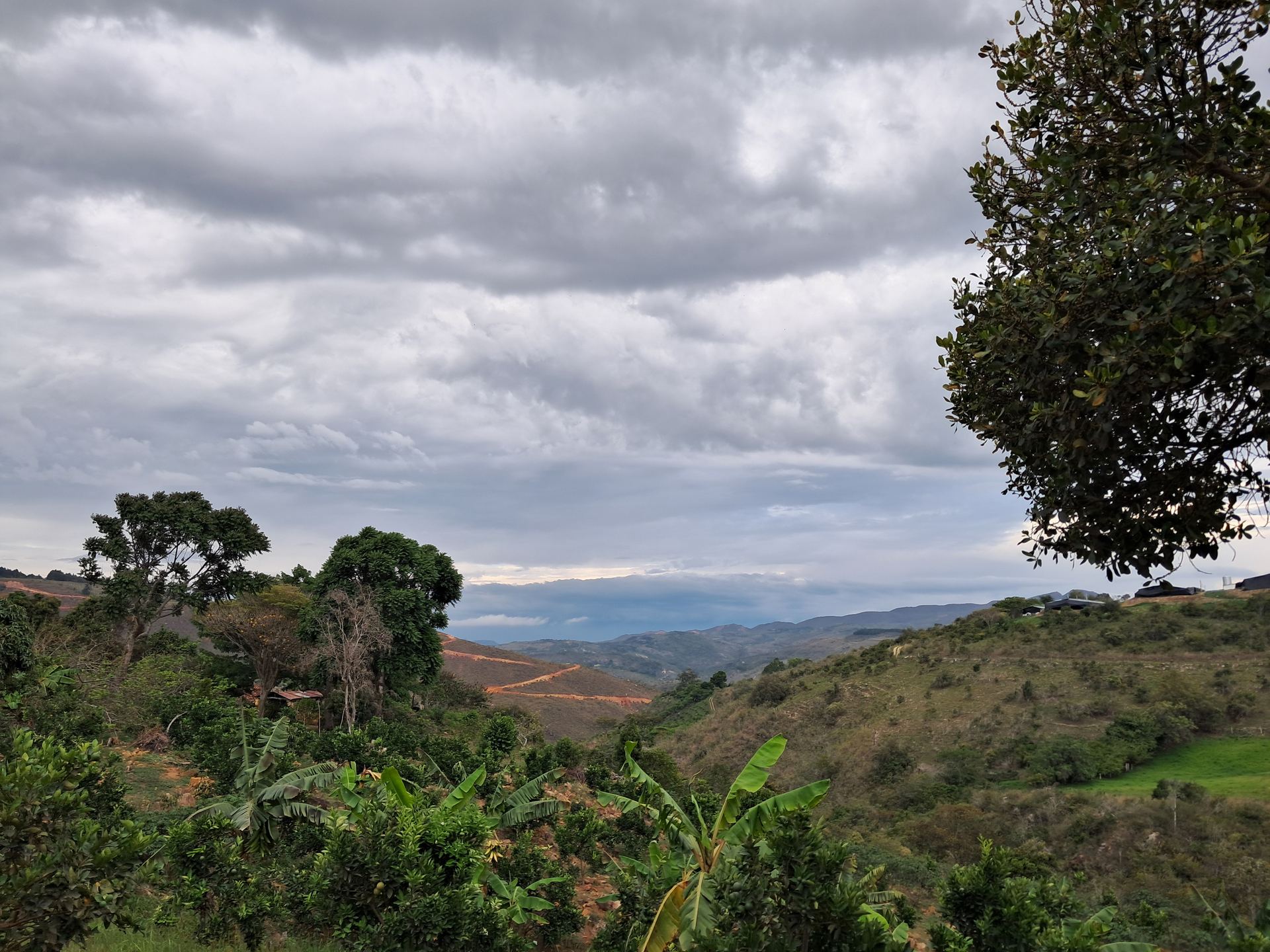
La Cacica rural district · Zapatoca · Santander
"We are the technical instrument of Zapatoca's Peasant Agri-Food Territory — the network that turns community sovereignty into projects, partnerships and enforceable rights."
Legal and strategic framework
TECAM is the Colombian legal figure that recognizes peasants as a collective subject of rights, with autonomy over their territory, production and way of life. It is the legal and strategic basis of everything we do.
A pilot district for Colombia.
The network of Zapatoca's 27 rural districts: the real regional pilot.
A pilot municipality for the world.
TECAM recognizes the collective right to inhabit, manage and defend the territory. Land is cared for, passed on between generations and worked in common — not speculated with.
Communities have the right to decide what they grow, how they grow it and who they sell to. Production serves the family and the district first; then the market.
Territorial management is collective. Projects, investments and partnerships are decided with the community — not in a city office or an outside company.
Legal basis
Right to land. The State must promote progressive access to land ownership for agricultural workers.
Subject of rights. The Court recognized peasants as a collective subject of special constitutional protection.
Rural transformation. Communities as protagonists of rural change, not passive beneficiaries.
Land regularization. Implements the Rural Reform in access to and formalization of rural property.
Climate Action. Links sustainable peasant production with carbon markets and the Paris Agreement.
TECAM regulation. Regulates how Peasant Agri-Food Territories are created, delimited and governed, and how they connect with agrarian policy.
The challenge, in numbers · DANE 2025
According to Colombia's national statistics office (DANE), living in the countryside still means facing far more deprivation than living in a town. The gap is not only about income, but about education, work, housing and connectivity — and it is the reason behind each of CIDERT's lines of work.
"Rural poverty is not a single problem: it is lack of decent income, schooling, adequate housing and connectivity, all at once. That is why the network works on all four doors at the same time."
What we do
Complementary technical fronts for sustainable territorial development in Santander, focused on the Magdalena Medio and Comunera regions.
Agroforestry and water · Zapatoca
Agroforestry systems, reforestation with native species and restoration of riparian strips and biological corridors.
Projects under Colombia's public investment methodology (MGA-BPIN, royalties system), international logical frameworks (FAO, GEF, UNDP, GIZ) and national calls.
A community protocol to monitor springs, water quality, biodiversity and carbon, with community members trained as certified field technicians.
Payment for Ecosystem Services schemes with the Ministry of Environment and carbon credit projects under the Verra VCS standard.
Partnerships with SENA (the national training service) and regional universities for certified training in agroforestry, nurseries and monitoring.
Compost, bio-inputs and native-species nurseries with traceability, and access for local producers to differentiated markets and direct channels.
Territorial network
Five ways to take part, each with different rights and commitments. Governance is lean: a General Assembly of members, a Board, a legal representative and a statutory auditor, plus a quarterly Territorial Roundtable open to every member and ally.
Peasant associations and Community Action Boards with legal status. They vote in the Assembly.
Municipalities, SENA, universities, environmental authorities.
International NGOs, foundations, companies, environmental funds.
Rural groups and collectives without legal status.
Researchers, professionals and consultants.
Technology proposal · Seeking funding
We propose affordable AI tools that run without internet, in Spanish, on equipment installed inside the territory. Nothing is implemented yet: an earlier attempt to fund a pilot in La Cacica did not succeed, so we are starting from zero — with a low-cost seed pilot designed to produce our own evidence first.
LoRaWAN sensors at springs would record water levels around the clock and send alerts when they fall out of range.
A small open language model on a local computer, answering only from verified documents — technical guides, procedures, funding calls.
A photo of a coffee or cocoa leaf, taken with a phone, would identify disease before damage is visible.
Verifiable metrics — water levels, trees planted, forecast accuracy — for PES, carbon and cooperation reporting.
One LoRaWAN gateway, three water-level sensors and a language-model prototype on an existing computer. Larger phases are unlocked only if the pilot meets its indicators.
Who walks with us
Organizations already part of the network. The network is growing.
The first level of local self-government in La Cacica, the community's voice before the municipality of Zapatoca, and a key partner in participatory processes.
An association of the district's peasant families, currently being consolidated. It is part of the pilot and is meant to become the community and productive arm of the network.
LegalTech firm in law, technology and territorial intelligence. Active agreement with CIDERT on land-title management and rural property formalization.
We also have agreements with local companies in technology, sustainable real estate and food. See all our allies.
Partnerships
If your organization works on rural development, environment, digital inclusion or technical cooperation, we would like to hear from you. We write in English and Spanish.